A six week evening course looking at selected films from Russia’s rich film history.
With 2017 marking 100 years since the Russian Revolution, the course
looks at examples of Russian cinema from the Soviet era through to
glasnost, and today’s film production under Putin.
Filmmaking in Russia dates from 1896, a recording of Tsar Nicholas’s
coronation shot by a Lumière cameraman. Since then, Russian cinema has
evolved alongside distinct historic upheavals, and yielded a wealth of
filmmakers, some of whom have significantly influenced the art of cinema
itself. Eisenstein’s use of montage, Tarkovsky’s long takes, Sokurov’s
poetic themes; the cinema of Russia has produced challenging, visionary
work.
The course will run on consecutive Tuesdays, commencing at 18.30 unless otherwise stated.
The films showing in this course are:
Ivan the Terrible Part 1 (Mar 21st)
Moscow Does Not Believe in Tears (Mar 28th)
The Commissar (Apr 4th)
Night Watch (Apr 11th)
Leviathan (Apr 18th)
Hipsters (Apr 25th)
More information about the films and the cost of the course at http://ifi.ie/evening-course-from-russia-with-film/
The Audi Dublin International Film Festival takes place from 16-26th Feb this year. There are a number of relevant films and cartoons on offer, for example:
Andrzej Wajda, who passed away on the 9th of
October, was Poland's leading filmmaker and one of the major figures in the
post-war European cinema. His unique style influenced such directors as Martin
Scorsese, Roman Polanski, and Francis Ford Coppola. Wajda’s films have received
the major prizes of the film industry, including an honorary Oscar in the year
2000. Wajda became known for drawing on Polish history and political subjects
to create humanistic movies focusing on ordinary people's lives that were also,
somehow, a political call to action. His last film, Afterimage, a tribute to avant-garde
artist Wladyslaw Strzeminski was selected as the Polish entry for the 2017 Oscars
in the category Best Foreign Language Film.
To celebrate Andrzei Wajda's legacy, the Department of Russian & Slavonic Studies and
the Department of Film Studies are screening four of Wajda's films, starting with Ashes and Diamonds
on Thursday, 3 Nov 2016, in 2041B (Teatar M. Ui Chadhain)
at 7pm. The remaining dates are:
17/11/2016, The Promised
Land, 7pm, room 2043 (Arts Building). Introduced by Dr Aneta Stępień (Department of Russian and
Slavonic Studies)
24/11/2016, Katyn, 7pm, Maxwell 5 (Hamilton building). Introduced by Dr Conor O’Kelly (Department of Film Studies)
01/12/2016, Wedding, 7pm, Room 2043 (Arts building). Introduced by Dr Piotr Sadowski (School of English)
Followed by discussion. All screenings are free, and all are welcome.
The evening courses at the Department are back this week. We have an exciting range of offers, from language courses in Bulgarian, Croatian, Czech, Polish and Russian, to new lecture courses:
- Contemporary Czech Literature
- Contemporary Bulgarian, Croatian, Polish and Russian Cultures (4 five-week modules which can be taken separately or together)
- Contemporary Literature and Cinema in the European Southeast and the Question of Balkan Identity
Happy New Year to all our readers! We are pleased to announce that we are now enrolling for several new language and lecture courses starting the week of 18th January. - Bulgarian language - Czech language - Introduction to Polish Culture - The Golden Sixties and the Czech New Wave in Film
Schedules and application forms can be found on our website; please address enquiries to the Departmental Secretary, Nadia Browne.
But that's not all. As a new initiative, we are calling on all you film buffs to join us for our brand-new
Central and Eastern European film club
We will have weekly screenings of subtitled films from several of the countries studied in the Department.
22 January 2016Djulgerov Georgy, “Авантаж” [Advantazh], 1977
29 January 2016Gardev Yavor, “Дзифт” [Zift], 2008
5 February 2016Ryazanov Eldar, «Жестокий романс» [A Cruel Romance], 1984
12 February 2016Kalatozov Mikhail, «Летят журавли» [The Cranes are Flying], 1957
19 February 2016Ivanda Branko, “Lea i Darija” [Lea and Darija], 2011
26 February 2016Aćimović Dejan, “Moram Spavat’ Andjele” [I have to sleep, my angel], 2008
11 March 2016Kieślowski Krzysztof, “White”, 1993
1 April 2016Pasikowski Władysław, “Pokłosie” [Aftermath], 2012
All screenings will take place at 6:00 pm in Room 5051 (the Departmental Seminar room) in the Arts Building, Trinity College Dublin. Free admission.
The tenth edition of the IFI Kinopolis Festival of Polish Film opens on Thur, 3rd Dec.
Programme: Thursday 3rd December
18.30 11 Minutes
Friday
4th December
18.30 Karbala
Saturday
5th December
16.00 Chemo
18.10 Anatomy of Evil + Q&A with Krzysztof Stroiński
Sunday
6th December
12.00 Kinopolis for Children: Animated Programme
18.30 Body/Ciało
More information at http://www.ifi.ie/kinopolis http://kinopolis.ie/ https://www.facebook.com/KINOPOLIS.DUBLIN/ and in the press release below.
IFI Press release
The
IFI and Kinopolis celebrate the Festival’s tenth edition with one of its
strongest programmes yet, displaying the wealth of talent currently working in
Polish cinema, from elder statesman Jerzy Skolimowski to auteur Małgorzata
Szumowska to first-time director Bartosz Prokopowicz. The Festival will welcome
special guest Krzysztof Stroiński, star of thriller Anatomy
of Evil, who will take part in a Q&A.
IFI Director Ross Keane said: "We're delighted to once again collaborate with
Kinopolis, particularly with such a fine programme of new releases on its tenth
anniversary, including the latest feature from a previous IFI
guest, Jerzy Skolimowski, to open this year's Festival."
Opening this year's feast of Polish film is 11 Minutes (11 Minut), an Irish
co-production from director Jerzy Skolimowski(Essential Killing)about an ordinary day on and around Warsaw’s
Grzybowski Square where the lives of a disparate group of people overlap
over the course of 11 minutes, leading to an unexpected chain of events that
will decide many of their fates.
Mainstream Polish cinema is represented by Krzystof Lukaszewicz's Karbala. In 2004, the Polish military controlled the
South Central zone of Iraq, which included the Karbala governorate and its capital, a city
holy to Shi'a Muslims. A sudden uprising saw a small contingent of Polish and
Bulgarian soldiers hugely outnumbered by militia forces, but ordered to hold Karbala’s City Hall, seat
of the local authorities and police. This fictionalised version of the
subsequent battle, the largest in which Polish troops had taken part since the
Second World War, is an intelligent and unsentimental example of quality
mainstream Polish cinema.
In Bartosz Prokopowicz's Chemo, Benek
(Tomasz Schuchardt), suffering from depression and entertaining thoughts
of suicide, meets the vivacious Lena
(Agnieszka Żulewska), whose free-spirited embrace of life turns him around. Lena’s attitude, however, is revealed to be inspired by
her cancer, for which she has decided not to undergo treatment. This resolve is
pushed to the background when she unexpectedly falls pregnant. Drawn from the
experience of first-time director Bartosz Prokopowicz, whose own wife was
killed by the disease, Chemo is undeniably
moving in its depiction of Lena’s decline, but
it determinedly avoids the maudlin, instead celebrating the couple’s
love.
The Festival welcomes Krzysztof Stroiński to the IFI for a Q&A following
his latest feature, Anatomy of Evil, a
gripping thriller directed by Jacek Bromski in which he plays former
hitman ‘Lulek’, recently released on parole and offered one last job
by the very prosecutor responsible for his imprisonment. Realising the
limitations imposed by age, he presents himself to Staszek (Marcin Kowalczyk),
a sniper dishonourably discharged from the army, as a senior officer who may be
able to get him back in uniform. Duplicity and suspicion abound as events come
to unexpected conclusions.
The Animation
Programme is always one of the
festival’s most popular events, and this year’s begins with a trio of shorts
featuring Hip-Hip
and Hurra, the pink hippopotamus and
purple weasel who together solve mysteries aimed at imparting knowledge of
nature to children. This is followed by an episode of Mami Fatale, in which an elderly woman abandons the city for an
idyllic life in the countryside, preparing delicious meals for her pets, Psiną
(Doggie) and Prosięciem (Piglet). The final film, Jim and Screw, sees two boys whose lively imaginations lead them to
adventures in which they encounter beloved characters from well-known
fairy-tales.
Closing the festival this year is Body/Ciało by Małgorzata Szumowska (Elles, In the Name of . . . ) which won the Berlinale’s Silver Bear for
Best Director. Body is a complex,
eccentric, and thoroughly engaging rumination on how one deals with the loss of
a loved one, laced with droll black humour. Coroner Janusz (Janusz Gajos), for
whom death is quotidian, is unable to relate to the grief of his daughter Olga
(Justyna Suwała) at the loss of her mother. Olga’s decline into an eating
disorder leads them to therapist Anna (Maja Ostaszewska), who claims she has a
message for them from beyond . . .
Tonight the annual conference of the Irish Association for Russian, Central and East European Studies entitled ‘Memories and Identities in Central and Eastern Europe’ starts off with a public lecture by
Polly Jones (Oxford) on ‘The Many Uses of the Usable Past: Rethinking Revolution(s) in Late Socialism’
6pm, Long Room Hub, TCD
If you are interested in attending the conference itself, please go to IARCEES' website for the full programme and registration details.
The Department, together
with the Embassy of the Czech Republic in Ireland, invites you to a free
screening of a new documentary film on the life and work of Vácav Havel,
dissident playwright, philosopher, politician and statesman, and first
President of post-Communist Czechoslovakia/the Czech Republic. We are
privileged to be able to host one of the very first screenings of this new film
outside of the Czech
Republic. The film will
be shown in in Czech with English subtitles tomorrow night, Wednesday, 10
December, at 7.30 p.m. in the Robert Emmet Theatre, Arts Building. Everyone welcome.
It never rains but pours ...
So, starting today, there are three cinematic events to partake in.
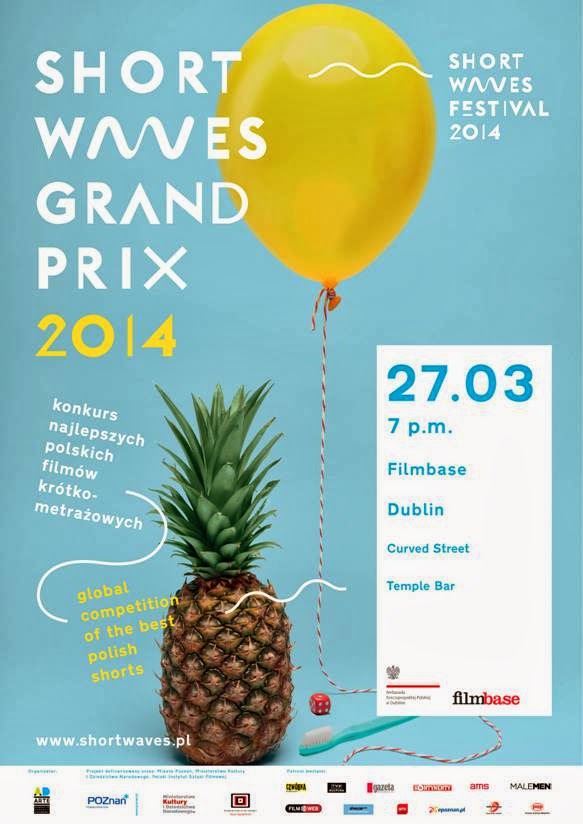
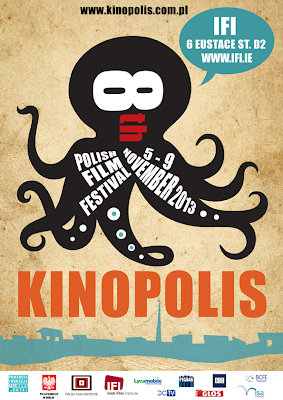
First up, the 9th KINOPOLIS - the Polish Film Festival, running from 6-9 November 2014 at the IFI, screening a selection of feature films (The Word, Papusza, JackStrong and TheMighty Angel),
animated filsm and documentaries by Paweł
Łoziński.
Second, there will be a screening of
the Polish film "Ida" organised by the Department in celebration of Poland's
Independence Day. The Filmnight
takes place next Tuesday, 11 November, from 7-9pm, in the Museum Building (Room M20)
at TCD. The film will be shown in
Polish with subtitles, and the screening will be preceded by a short talk by Dr
Aneta Stępień.
And finally, tomorrow, Friday, 7th November, the IFI premières the new film 'Leviathan' by Russian filmmaker Zvyagintsev. The film will run through Thursday, 13th November.
A romantic interlude now, with fresh translations of love poems by two of the most popular bards (poets / singer-songwriters) of Russia's Thaw period. The poems were translated for a poetry evening organised by Trinity College Dublin's Russian and Slavonic department.
"I Love You Now" was written by Vladimir Vysotsky to his wife Marina Vlady. The French daughter of Russian emigrants, winner of a best actress award at Cannes for 'The Conjugal Bed', Marina Vlady reconnected with her Russian heritage in the more tolerant atmosphere that followed Khrushchev's Thaw, becoming a juror at the 4th Moscow International Film Festival in 1965. Meeting the popular Vysotsky while in Russia, the two were married in 1969 and carried on a long-distance relationship for ten years before Vysotsky's death in 1980. This relationship made it possible for Vysotsky to travel abroad to France, the USA and Mexico among other places, broadening his perspective and cultural reach beyond what was available to his contemporaries and leaving us many recordings of his banned songs in Western performances. His wife's importance as a cultural ambassador for the USSR protected him somewhat from the Soviet authorities and their suspicion of his subversive songs. In 'I Love You Now' Vysotsky reflects the uncertainty and intercultural/linguistic issues of their marriage. The clip is illustrated by footage of Vysotsky and Vlady.
VLADIMIR VYSOTSKY - I Love You Now
I love you now - not secretly, out loud! Not "after... until" - I burn in your light! Sobbing or laughing, but I love you now! I want no past; future's out of sight. "I loved": a grave holds less despair! It clips my wings and hobbles hopes. Though the poet of poets might declare "I loved you - and love still, perhaps..."
Thus they speak of wilted things - Condescending pity for the lost. Thus they speak of dethroned kings, Regretful for a thing that's past; For urges stripped of urgency, When "I love you" loses currency.
I love you now - vows can't explain, My time is now - I won't cut its vein! This time, ongoing, while the moment lasts- I fear no future and I breathe no past. I'll come to you over sea or land, Chained or headless, I'll come still! Only don't mistakenly demand To 'I love you' be added 'always will'.
That "always" has a bitter taste, Forged signatures and rot and waste, A get-out clause, a 'just in case', Dull poison at the glass's base, And a slap in the present's face, Where 'I love now' in doubt is placed.
My French dream overflows with time, The past's not so, the future's scarier I'm pilloried in the stocks and I'm Called up to the language barrier. The language gap! A state defective! Together we can leap this fence, I love you even when it's tense: In the future and the past perfective.
"Rain Whips My Face and Collarbones" by Bella Akhmadulina shows the work of the most famous female poet of the era. Called 'the best living poet in the Russian language' by Joseph Brodsky, Akhmadulina (of Tartar/Russian/Italian heritage) was a close friend of Bulat Okudzhava, and her work was often suppressed due to her support of many artists persecuted by the Soviet regime, including Boris Pasternak, Aleksandr Solzhenitsyn and Sergei Paradjanov. She declared herself apolitical, however (itself a radical stance at the time), and recited her poems of love and human relations to sold-out stadiums in the 1960s, before moving on to discussions of philosophy and religion. By the time of her death in 2010 she had many awards in her homeland and the status of a national treasure.
BELLA AKHMADULINA (Untitled 'Rains whips my face...' - 1955)
Rain whips my face and collarbones, Over masts the thunders rip, You have come upon me Like a storm upon a ship.
What will be will be I do not seek to know, If I'll be flung up into joy Or smashed against sorrow.
I'm frightened and elated Like a ship riding the wave, I don't regret our meeting I do not fear to love.
Newly, rhythmically and rhymingly translated just in time to be late for Pride,The Light Blue Puppy is a classic 1976 Soviet 'cheerful, musical tragedy', animated in a distinctively fluid style using flowing India ink, and boasting the vocal talents of some of the 1970's most beloved stars, including Alysa Freindlich (star of Eldar Ryazanov's "An Office Romance") and Andrei Mironov (star of Zakharov's "12 Chairs" and "An Unusual Miracle") . Telling the story of a light blue dog who is shunned for being different, it is a children's story encouraging tolerance and promoting positive diversity, ending in an explosion of rainbow colours. In an age of dancing with the censors, when films were regularly scrutinised for their subversive subtexts, many were quick to spot a gay theme in 'The Light Blue Puppy', who was even named one of '69 Outstanding Russian Gays and Lesbians' in a recent publication by Ganymede Press, according to Russia's leading gay internet portal: www.gay.ru. The cartoon may have played a key role in popularising the slang term 'goluboi' (light blue) to refer to homosexuals, with its theme of the lonely, bullied puppy longing for a flamboyant and self-confident rescuer and mentor being one that spoke to the experience of many Russian gays during the Soviet era's criminalisation of homosexuality. Based on a book by Hungarian author Gyula Urban which featured a black puppy (serving as a metaphor for the plight of African-Americans in the United States), Yuri Entin, the creator of 'the Light-Blue Puppy', has explicitly stated his pro-gay sympathies and that he never intended the cartoon to be read as a satire of homosexuals, saying:
"Believe me, never in my life would I have done it if I could imagine what it would be associated with. It's literally hitting below the belt. I have a huge amount of acquaintances of non-traditional orientation, they are wonderful people that I have the tenderest relations with. And so I would never have allowed myself to mock them."Source (in Russian).
Many pro-gay groups celebrate the story, with the 'Planet Krasnoyarsk' club in Krasnoyarsk, Siberia, staging their own musical theatrical version in 2000, while a children's ballet production in the Ekaterinburg theatre was cancelled by director Alexander Novikov in 2010 for being "saturated with paedophilia and homoeroticism" despite the fact that the story never actually references homosexuality at any point. For a complete list of Russian-language articles on the significance of 'the Light Blue Puppy' in gay culture, click here.
ABOVE: a montage of footage from Sergei Paradjanov's 'Sayat Nova' set to the music of FireX
The most famous victim of Soviet anti-homosexuality legislation was the bisexual Armenian-Georgian film director Sergei Paradjanov. Already controversial for his celebration of the ethnic traditions of Ukraine and Armenia in his masterpieces 'Shadows of Forgotten Ancestors' and 'Sayat Nova' / 'The Colour of Pomegranates', he served 3 months (of a five year term) on a conviction for homosexual acts with a KGB officer in 1948 and in 1973 he was sentenced to five years of hard labour (serving four) for the alleged rape of a male communist party member and the 'propagation of pornography'. His claim to have given sexual favours to 25 party members, made to a Danish magazine and serving as grounds for the arrest, was seen by many as another in a long line of the director's scandalous provocations, with some commentators even questioning whether his homosexual inclinations were more than a countercultural pose. Andrei Tarkovsky and Mayakovsky's muse Lilya Brik were among the Russian artists who campaigned for his release, while his post-prison reunion with his friend Vladimir Vysotsky was reportedly tearful. The renowned poetess Bella Akhmadulina said on his behalf "he was guilty of being free". In prison, Paradjanov created hundreds of drawings and collages, many now displayed in the Paradjanov Museum in Yerevan, Armenia. His mature (post-1964) films have a lush, camp aesthetic that conflicted with the demands of socialist realism, and 'Sayat Nova' also features daring gender-bending in its use of Georgian actress Sofiko Chiaureli in a dual role as both the young poet and his motherin this sequence.
Openly gay imagery disappeared from Russian culture in 1933 when Stalin criminalised homosexuality. However, classic films from the 1940s which celebrate the brotherhood of students and workers' collectives through intense male bonding, such as 'Attestat Zrelosti / The Certificate of Education' (the most suggestive clips of which are shown above, unsubtitled) have been cited, and in some cases celebrated, by modern Russian audiences for their homoeroticism. Similarly, the films of the 1980s and 1990s by director Alexander Sokurov have been labelled homoerotic for featuring sensual imagery of physical closeness and affection between men, often scantily clothed, although without explicit sexuality in these relations. Sokurov himself has dismissed these claims as the product of diseased Western imaginations. The first Russian film to have openly homosexual themes is 2004's comedy drama "You I Love".
The most famous gay Russian is probably the composer Pyotr Ilyich Tchaikovsky, whose sexuality is well attested in his own letters, once suppressed by Soviet censors, as well as his brother Modest's autobiography. His sexuality has been edited out of the proposed screenplay for an upcoming Russian biopic, Tchaikovsky, to be directed by Kirill Serebrennikov, under pressure from Russia's prohibitive anti-gay-propaganda laws, a move which is controversial. The writer Yuri Arabov has claimed that he 'will not sign his name to a film that advertises homosexuality' and that discussion of homosexuality is 'outside the sphere of art' in this interview. Tchaikovsky's sexuality continues to be celebrated abroad, including by Matthew Bourne's award-winning production of 'Swan Lake' with male swans (pictured). The importance of Tchaikovsky to the gay movement in Russia may be attested by the decision to call St. Petersburg's major organisation for gay social events 'The Tchaikovsky Fund'. Other famous gay and bisexual figures in Russian musical culture include Sergei Diaghilev, director of the 'Ballets Ruses' and Nijinsky, their most famous dancer, as well as the later ballet dancer Rudolph Nureyev, and the contemporary openly gay dancer, singer and director Boris Moiseev. Finally, in literature, the first openly gay novel in Russian was Mikhail Kuzmin's 1906 novel 'Wings'which compares the main character's final acceptance of his sexuality with growing wings. The poet Gennady Trifonov spent 4 years in prison in the 1970s for circulating openly homosexual poetry. Marina Tsvetaeva, one of the most famous poets of the Silver Age, had a lesbian affair with the poetess Sophia Parnok, and frequently referenced her bisexuality or lesbian desire in her poetry, discussed here. For a full discussion of gay themes in Russian literature, click here.
The 5th Dublin City Festival or Russian Culture kicks off today at 12 noon at the Hugh Lane Gallery with a concert of classical music. In the course of one week, you can sample Russian culture through a long line-up of events for all ages. The Festival concludes next Sunday, 2nd March, with the traditional Family Day.
The Department is involved with three events this year:
The now-traditional Quiz for transition-year students and Talk about living in Russia (Tue, 25th Feb, 1pm, Ilac centre library)
A Gala concert/poetry evening (Wed, 26th Feb, 7pm, Atrium, TCD)
Open Day at the Department, where we will showcase some of our activities (Fri, 28th Feb, 12 noon-3pm, Rm. 5051, Arts Building, TCD)
As part of the Open Day, the Head of Department will give a short introduction to the Department at 1pm, and we will give a guided tour of Trinity in Russian at 2pm, starting in the Department. Everyone welcome - drop by and put your name on the list!
This course invites participants to discover modern Poland from many perspectives: from historical experience to cultural tradition and artistic innovation. Topics covered include the complex memories of the Second World War, the communist period and the migratory experience, the Jewish and Turkic influences that enrich Poland's culture, the country's folk traditions and its cutting-edge experimental art. Along the way, it examines the work of a wide variety of internationally renowned Polish artists, from the theatrical revolutionaries Grotowski and Kantor to the Oscar-winning filmmakers Wajda and Polański.
The course is intended for a wide audience with a general interest in the countries of Eastern Europe and Poland in particular. The sessions are delivered in English by staff of Trinity College and special guest lecturers.
Alex and Ailbhe from first year have made this great video, their entry for the Eurotrip Citizen X competition, and need your
vote to take on the TalkToEU Eurotrip
Challenge.
If they win, they'll be
racing across 5 countries over 6 days, while completing 5 tasks. If you'd like
them to take on the Eurotrip challenge, then give them your vote here - and share the link!